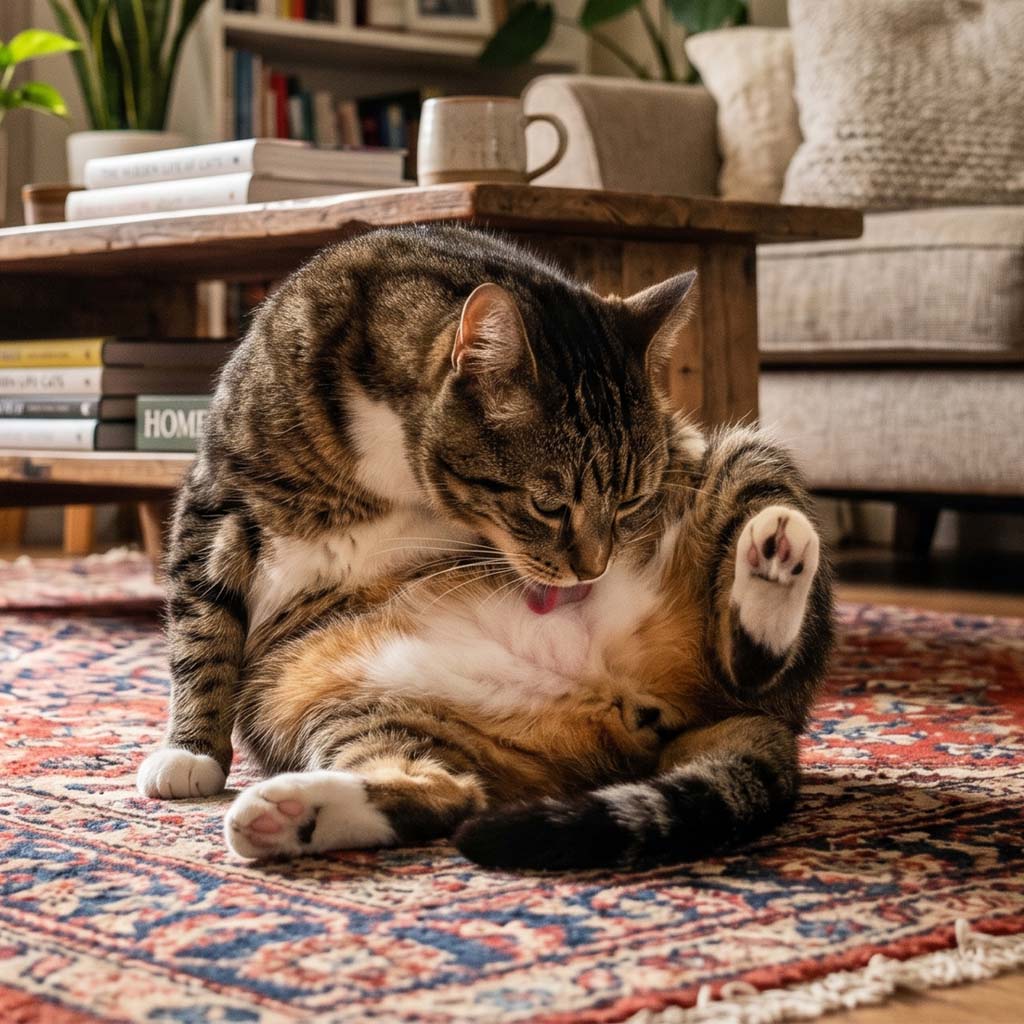
Bald Spots and Belly Licking: Is Your Cat Over-Grooming?
Cats are famously clean animals, spending up to half of their waking hours grooming. It’s a sign of a relaxed, healthy feline. But there is a fine line between fastidious hygiene and obsessive behavior.
If you start noticing thinning hair, broken stubble, or completely bald patches—especially on your cat’s belly, inner thighs, or the base of their tail—your cat has crossed over into over-grooming. Also known as alopecia, this excessive licking isn’t a grooming choice; it’s a desperate attempt to soothe underlying discomfort.
The challenge with over-grooming is that the root cause can be physical, psychological, or a complex mix of both. Here is what your cat might be trying to tell you.
1. The Itch: Parasites and Allergies
Skin irritation is the most common physical cause of excessive licking. The cat licks the area to relieve the intense itch, eventually removing the hair entirely.
- What it could be: Fleas are the usual suspect, even for indoor cats. However, if your cat is on flea prevention, the culprit might be an allergy. Cats can be allergic to specific proteins in their food, or environmental factors like dust mites, pollen, or certain fabrics.
- What to track: Does the itching correlate with a recent change in their diet? Does it seem worse during certain times of the year (seasonal allergies)? Tracking these details helps your vet determine if an elimination diet or allergy testing is necessary.
2. The Ache: Hidden Joint or Internal Pain
When a cat experiences localized pain, their instinct is to lick the painful area in an attempt to “heal” or soothe it.
- What it could be: A bald patch directly over a hip or knee joint is a strong indicator of arthritis pain. If a cat is obsessively licking their belly or genital area, it could be a sign of a painful urinary tract infection (UTI) or bladder crystals.
- What to track: Look for accompanying symptoms. Are they also limping or hesitating to jump? Are they making frequent, unsuccessful trips to the litter box? Combining a grooming observation with a mobility or litter box observation is the ultimate diagnostic clue.
3. The Nerves: Stress and Anxiety (Psychogenic Alopecia)
Grooming releases endorphins that make a cat feel calm. When a cat is chronically stressed, they may use grooming as a coping mechanism, much like a human biting their nails.
- What it could be: Cats are sensitive to routine changes. A new baby, a new pet, moving to a new house, loud construction outside, or even tension between humans in the home can trigger anxiety-induced over-grooming.
- What to track: Did the bald spots appear shortly after a change in the household dynamic? Does the cat suddenly start frantic grooming when a specific person enters the room or a loud noise occurs?
Stop the Cycle with Data
Because over-grooming can stem from such wildly different causes (a flea bite vs. arthritis vs. a new puppy), your vet relies heavily on the context you provide to solve the mystery.
iKnowMyCat helps you uncover the hidden triggers.
Use the app to log exactly where the cat is licking and take weekly photos to track if the bald patch is growing or healing. Log environmental changes, diet updates, and litter box habits all in one place. By tracking these seemingly unrelated events, iKnowMyCat helps you and your vet spot the patterns necessary to stop the itch, ease the pain, or calm the stress.
Download iKnowMyCat from the App Store and Google Play today.
*Disclaimer: This guide is for informational purposes only and is not a substitute for professional veterinary advice. Always consult your veterinarian with any health concerns.