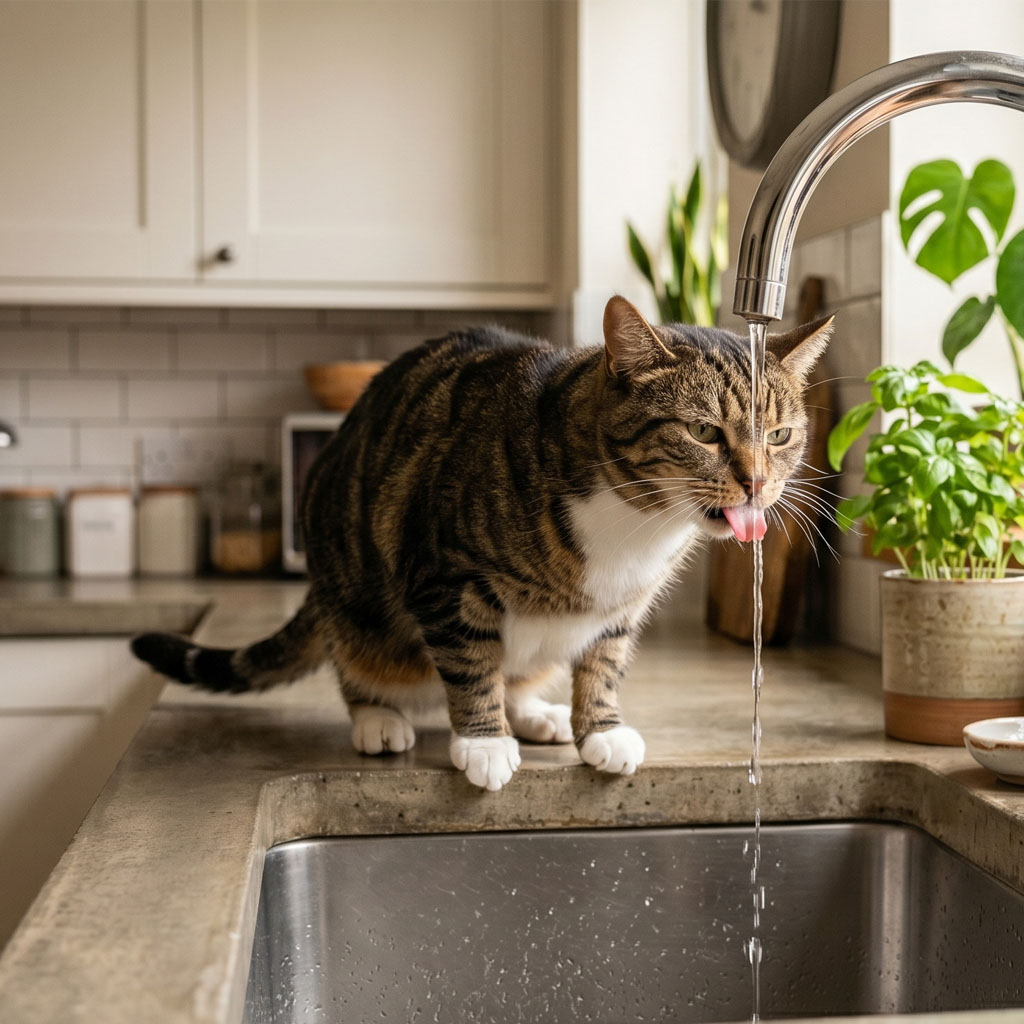
Empty Water Bowls: Why Is My Cat Suddenly Drinking So Much?
Cats are notorious for not drinking enough water. Their ancestors were desert dwellers who got most of their moisture from their prey. So, if you suddenly find yourself filling the water bowl twice a day, or catch your cat drinking from the faucet or the shower floor, it isn’t just a quirky new habit.
A sudden, noticeable increase in thirst—known medically as polydipsia—is one of the most reliable and urgent indicators that your cat needs to see a veterinarian. It is almost always accompanied by increased urination (polyuria), meaning you’ll be scooping much larger or more frequent clumps from the litter box.
Here are three common medical conditions that cause a sudden spike in your cat’s thirst.
1. Chronic Kidney Disease (CKD)
This is one of the most common ailments in older cats. As the kidneys begin to fail, they lose their ability to concentrate urine. The body flushes out dilute urine, causing the cat to become dehydrated and drink excessively to compensate.
- What it could be: The kidneys are no longer filtering toxins effectively, leading to a dangerous buildup in the bloodstream.
- What to track: Alongside the increased water intake, monitor the size of the urine clumps in the litter box. Note if your cat’s appetite is decreasing or if they are losing weight despite eating, as these are companion symptoms of CKD.
2. Diabetes Mellitus
Just like in humans, feline diabetes occurs when a cat’s body cannot properly produce or respond to insulin. This causes a massive buildup of glucose in the blood.
- What it could be: The excess glucose spills over into the urine, taking water with it. This massive loss of fluids triggers intense, unquenchable thirst.
- What to track: Watch for a contradictory symptom: a ravenous appetite paired with weight loss. A diabetic cat is often starving on a cellular level because their body cannot process the energy from their food.
3. Hyperthyroidism
When a cat’s thyroid glands become overactive, they produce too much thyroid hormone, sending the cat’s metabolism into overdrive.
- What it could be: The increased metabolic rate causes a higher core body temperature, leading to excessive panting and a desperate need to drink water to cool down and keep up with their hyperactive system.
- What to track: Hyperthyroidism often comes with distinct behavioral changes. Track if your cat has become hyperactive, overly vocal (especially at night), or easily agitated.
Don’t Rely on Guesswork
When you tell your vet “He’s drinking a lot,” their next questions will be about the litter box, weight, and appetite. Trying to mentally measure how fast a water bowl empties compared to last month is incredibly difficult.
iKnowMyCat helps you capture the hard data your vet needs.
Use the app to track when you refill the water bowl and log the size and frequency of urine clumps in the litter box. Add quick notes about their appetite and weight. Over just a few days, the app will generate a clear timeline that shows exactly how your cat’s habits are shifting, helping your vet quickly narrow down the diagnosis and start the right treatment.
Download iKnowMyCat from the App Store and Google Play today.
*Disclaimer: This guide is for informational purposes only and is not a substitute for professional veterinary advice. Always consult your veterinarian with any health concerns.