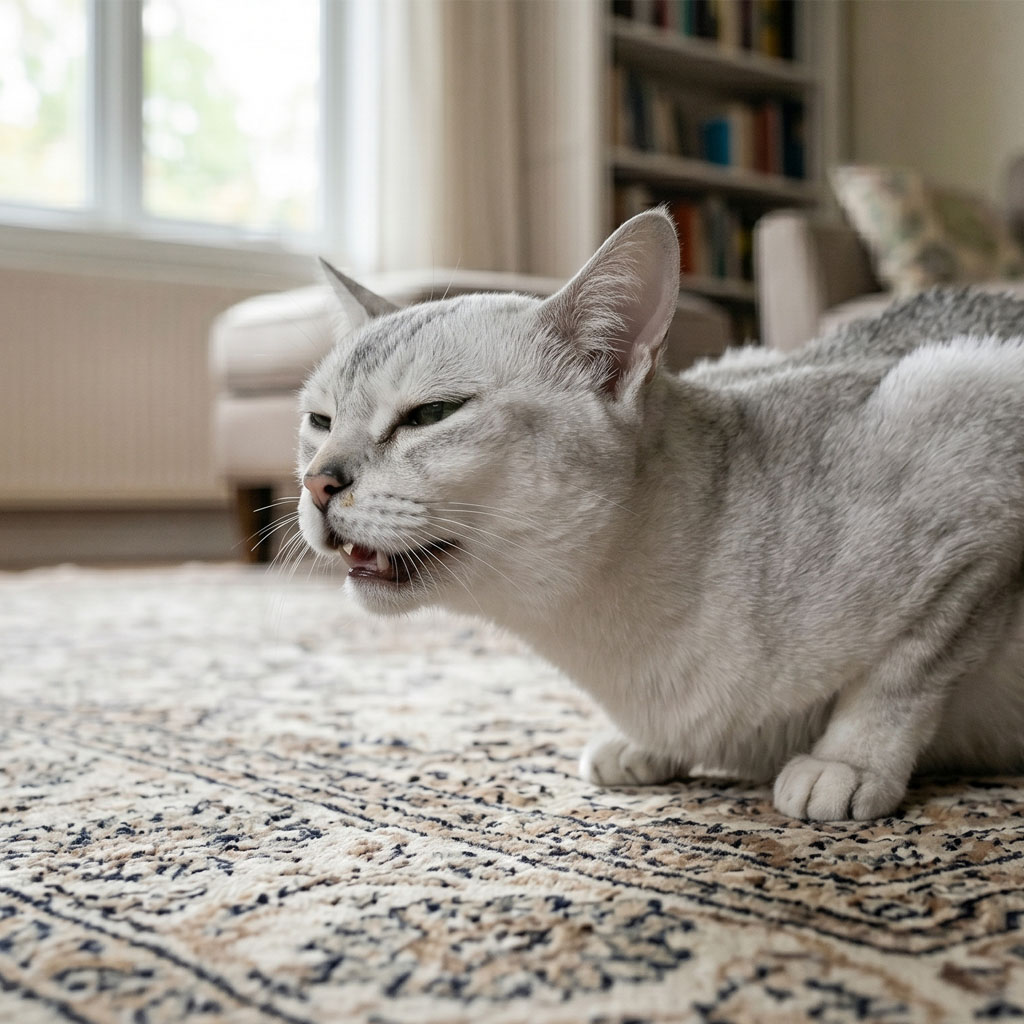
Hairball or Hacking? How to Spot the Subtle Signs of Feline Asthma
Every cat owner knows the unmistakable sound of a hairball being produced. It’s a loud, gagging noise that usually results in a messy clean-up on the rug. Because this sound is so familiar, it’s dangerously easy to assume that any coughing or hacking noise your cat makes is “just another hairball.”
However, if your cat is coughing but nothing ever comes up, they might be experiencing something much more serious: feline asthma. Asthma is an inflammation of the airways that makes it difficult for your cat to breathe, and an acute attack can be life-threatening.
To tell the difference between a minor digestive annoyance and a respiratory crisis, you need to look closely at their posture, the sound, and the context.
1. The Posture: Look at the Neck and Shoulders
The way a cat holds their body during a coughing episode is the biggest clue to what’s happening internally.
- What to look for: A cat with asthma will usually crouch low to the ground. They will extend their neck out straight and point their nose slightly upward to open their airway as much as possible. Their shoulders or sides may heave heavily with each breath.
- Why tracking helps: Taking a video of this specific posture is invaluable. Your vet can often diagnose the difference between a gastrointestinal issue (hairball) and a respiratory issue (asthma) just by seeing the cat’s body language.
2. The Sound: Dry Hack vs. Wet Gag
Listen closely to the nature of the cough itself.
- What to look for: A hairball typically sounds wet and gagging, originating from the stomach. An asthma cough sounds like a dry, wheezing hack originating from the chest. It often sounds like the cat is trying to expel a hairball but nothing ever comes out. The episode might end with a dry swallow.
- Why tracking helps: Note how long the coughing fits last. Do they happen in quick succession, or is it a prolonged, wheezing struggle?
3. The Triggers: What’s in the Air?
Feline asthma is frequently triggered by environmental allergens or irritants.
- What to look for: Did the coughing start right after you poured dusty litter into the box? Have you been using hairspray, air fresheners, spray deodorant, or strong cleaning chemicals? Is it a high-pollen day, or is the air very dry?
- Why tracking helps: Pinpointing the trigger is the key to preventing future attacks. If you only rely on memory, it’s hard to realize that your cat always coughs on the days you use a specific household cleaner.
Catching the Breath, Catching the Clues
Asthma attacks can be sporadic. By the time you get your cat to the vet clinic, their breathing might have returned to normal, making it difficult for the vet to diagnose the severity of the issue based on an exam alone.
This is where iKnowMyCat becomes an essential tool.
Instead of trying to explain the sound or posture to your vet, use the app to log the exact time and duration of the coughing fits. More importantly, use the notes feature to record potential environmental triggers—like a new candle or dusty litter. You can build a clear, shareable history that proves this isn’t just a hairball, ensuring your cat gets the breathing relief they need.
Download iKnowMyCat from the App Store and Google Play today.
*Disclaimer: This guide is for informational purposes only and is not a substitute for professional veterinary advice. Always consult your veterinarian with any health concerns.