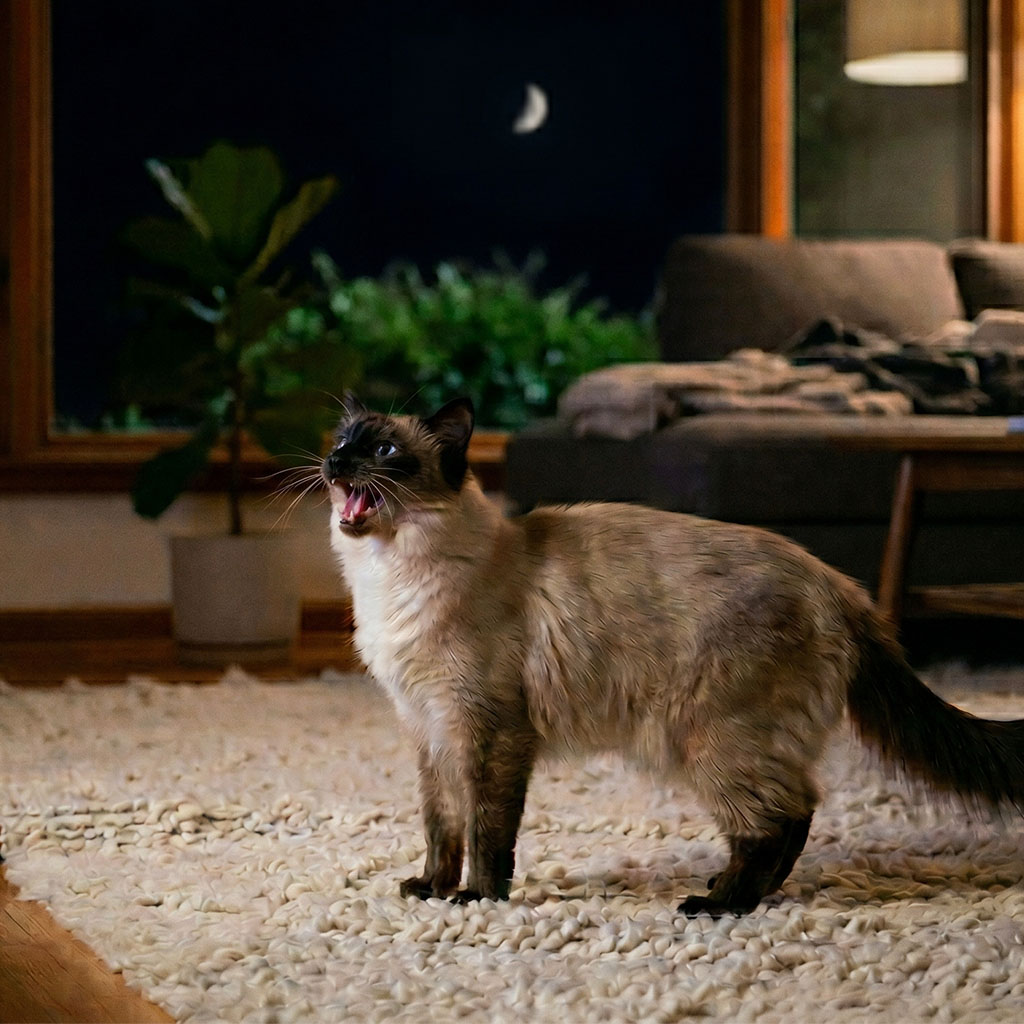
The Midnight Yowl: Decoding Sudden Vocalization in Senior Cats
You’re fast asleep when suddenly, from the hallway, it starts: a loud, mournful, repetitive yowl. It sounds urgent, almost distressed. You get up, check on your senior cat, and they just look at you, perhaps purr, and wander off. But an hour later, it happens again.
When a previously quiet older cat suddenly becomes excessively vocal—especially at night—it can be incredibly disruptive and worrying. It’s easy to dismiss it as them just “getting old and cranky,” but sudden vocalization is a classic clinical symptom of several age-related medical conditions. They aren’t trying to keep you awake; they are asking for help.
Here are the three most common reasons behind the midnight yowl.
1. Feline Cognitive Dysfunction (FCD)
Just like humans can develop dementia or Alzheimer’s, senior cats can experience cognitive decline. Their brain function deteriorates, leading to confusion and anxiety.
- What it could be: Your cat may literally be lost in their own home. They wake up in the dark, become disoriented, and cry out because they are scared and confused. The darkness exacerbates their anxiety.
- What to track: Note if the yowling only happens at night. Look for other signs of cognitive decline: are they staring blankly at walls? Getting “stuck” in corners? Forgetting where their litter box is?
2. Hyperthyroidism
An overactive thyroid gland speeds up your cat’s entire metabolism, leading to a cascade of physical and behavioral changes.
- What it could be: Hyperthyroidism causes hypertension (high blood pressure) and a general feeling of frantic restlessness. Your cat’s heart is racing, and they feel an agitated energy that they can’t burn off, leading to pacing and loud vocalizations.
- What to track: Watch their food bowl and litter box. Hyperthyroid cats typically display a ravenous appetite but lose weight anyway. They also drink a lot of water. If the yowling is paired with a massive appetite and weight loss, the thyroid is the prime suspect.
3. Sensory Decline and Pain
As cats age, their hearing and eyesight naturally deteriorate. A cat that is going deaf may meow louder because they simply can’t regulate the volume of their own voice.
- What it could be: A loss of senses can make the world feel unpredictable and terrifying, prompting them to cry out for reassurance. Alternatively, they could be experiencing the chronic, aching pain of osteoarthritis, which can feel worse at night when they are trying to settle down to sleep.
- What to track: Does your cat startle more easily than they used to? Are they hesitant to jump on the bed? Do they respond when you call them from another room?
Track the Timeline to Restore the Peace
Diagnosing senior cat issues is complex because many of these conditions (like kidney disease, hypertension, and hyperthyroidism) frequently happen at the same time. Vets need to know exactly when the behavior occurs and what accompanies it.
iKnowMyCat is your tool for senior care.
Log the exact times of the yowling episodes. More importantly, use the app to track their weight, appetite, and litter box habits. By combining behavioral logs with physical data, iKnowMyCat helps your vet determine if your cat needs thyroid medication, pain relief, or simply a nightlight to help them find their way, ensuring you both finally get a good night’s sleep.
Download iKnowMyCat from the App Store and Google Play today.
*Disclaimer: This guide is for informational purposes only and is not a substitute for professional veterinary advice. Always consult your veterinarian with any health concerns.